How to Improve Dive Center Accessibility Now
A diver may arrive ready to learn, buy equipment, or join a boat trip and still encounter barriers before they reach the water: a narrow entrance, a booking form that cannot be read by a screen reader, unclear mobility information, or staff who do not know how to adapt support without making assumptions. Learning how to improve dive shop accessibility means designing the entire customer journey around participation, dignity, and safety.
For dive businesses, accessibility is not a side project or a marketing claim. It is operational work. The centers that approach it seriously build stronger customer relationships, reduce uncertainty for staff, and create more realistic paths into diving for people with disabilities, temporary injuries, chronic conditions, different communication needs, and aging divers.
How to Improve Dive Center Accessibility Across the Journey
Accessibility begins before a customer enters the shop and continues through training, equipment preparation, transportation, boat operations, and follow-up communication. A ramp at the front door matters, but it does not solve a dive experience that still depends on inaccessible forms, vague policies, or improvised decisions on the day of a trip.
Start by mapping a typical guest journey. Review how someone finds the center online, asks questions, books, completes medical and liability documentation, arrives on site, uses changing facilities, receives a briefing, handles equipment, boards transport, and accesses post-dive records or learning materials. At each stage, ask a direct question: can a guest understand what is expected, communicate their needs, and participate safely without unnecessary friction?
This exercise often exposes issues that a facility inspection misses. A center may have an accessible entrance but no reliable way for a guest to disclose an accommodation request privately. It may offer adaptive diving support but hide that information several clicks deep in a website. Or it may have highly capable instructors whose knowledge is never documented in procedures, making the service dependent on one person being scheduled.
Build Physical Access Into Everyday Operations
Physical barriers deserve immediate attention because they are visible, consequential, and often solvable through practical improvements. Prioritize the paths guests use most: parking or drop-off areas, exterior approaches, entrances, reception, retail aisles, classrooms, restrooms, changing spaces, gear staging areas, and access to vehicles or docks.
A formal accessibility assessment is worthwhile, especially when renovating or moving locations. Requirements can vary by jurisdiction, building type, and business activity, so legal compliance should be reviewed with qualified local professionals. Compliance, however, is the baseline. A layout can meet minimum rules and still be difficult to navigate with wet gear, mobility devices, low vision, or limited upper-body strength.
Think about diving-specific realities. Keep aisles clear of tanks, crates, fins, and drying gear. Provide stable seating where divers can assemble equipment at a workable height. Use high-contrast signage in consistent locations. Ensure staff can move rental equipment from storage to a fitting area rather than expecting every customer to carry heavy items. Where showers or changing areas cannot be rebuilt immediately, be transparent about what is and is not available, then offer practical alternatives.
Boat diving requires its own assessment. Gangway angle, dock conditions, vessel configuration, entry methods, stowage, bathroom access, and emergency procedures all affect who can participate. Not every vessel can serve every diver safely, and pretending otherwise helps no one. The right standard is honest capability information, thoughtful planning, and partnerships with operators or adaptive diving professionals when a center’s own infrastructure has limits.
Treat equipment handling as a design problem
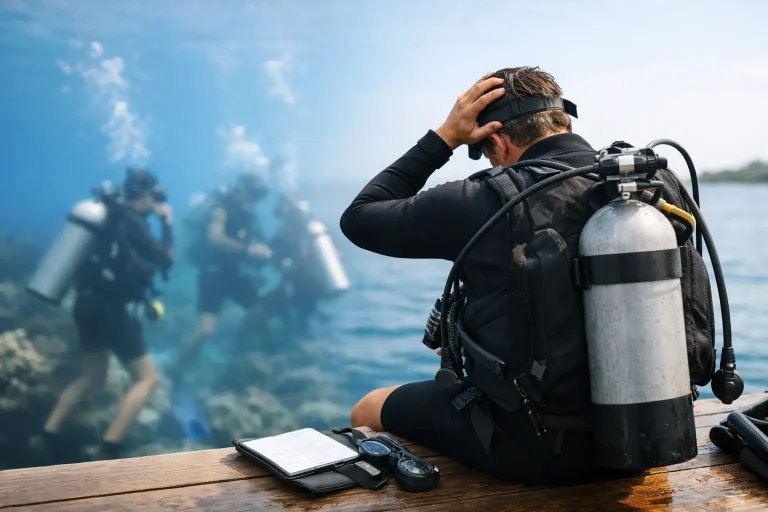
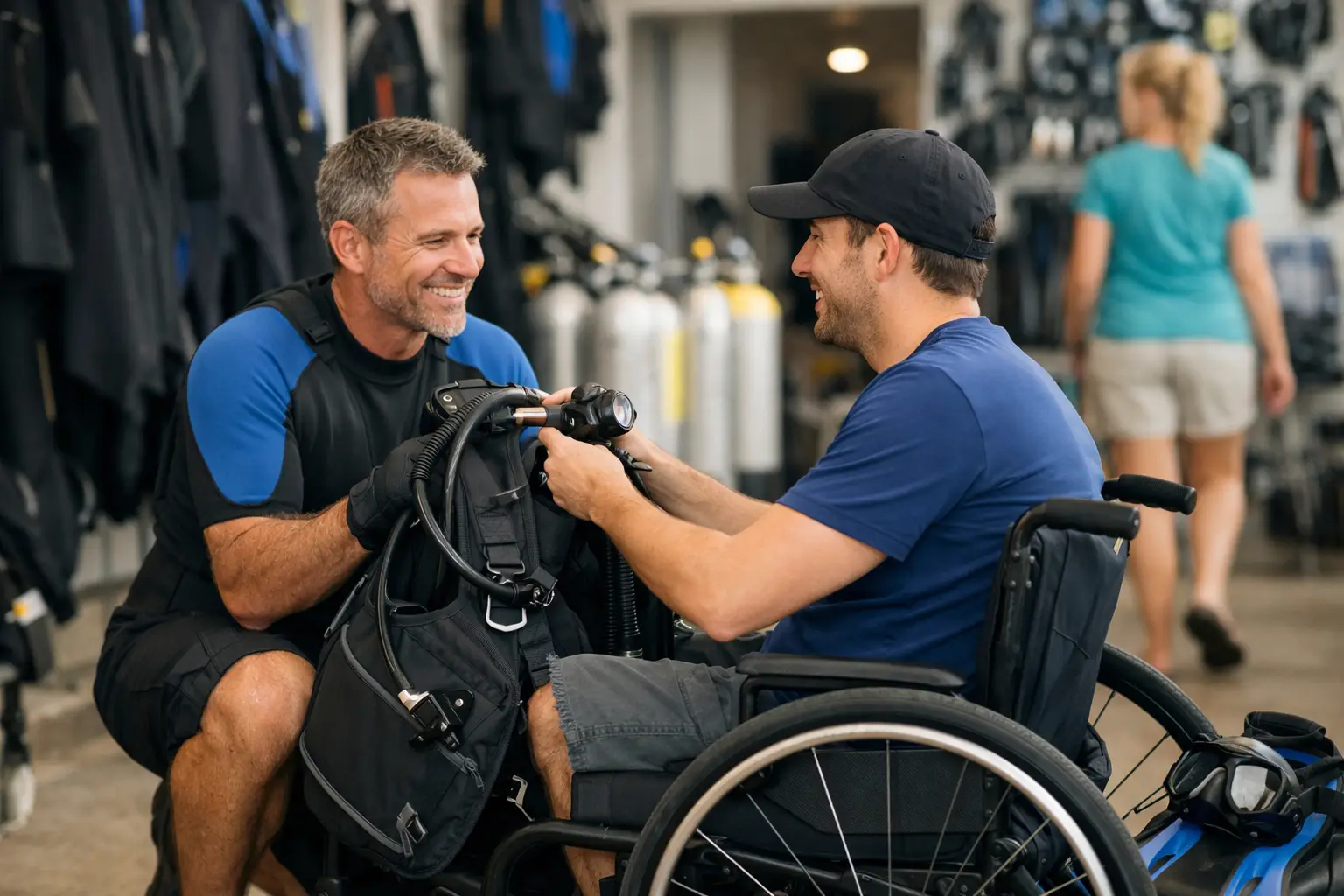
Scuba equipment is demanding by nature, but routine handling tasks should not become arbitrary barriers. Offer equipment configuration options, including backmount and sidemount where appropriate, lighter cylinder choices when locally available, and time for individualized fitting. Create a staging process that separates the work of preparing gear from the person’s ability to carry it across a parking lot.
The goal is not to make assumptions about what a diver can or cannot do. It is to identify the task, understand the safety requirement behind it, and find a workable method with the diver, instructor, and relevant support team.
Make Digital Access a Core Service Standard
For many customers, the first barrier is digital. If a prospective diver cannot navigate your website, interpret course details, complete a waiver, or contact the shop in a preferred format, physical improvements will never get the chance to matter.
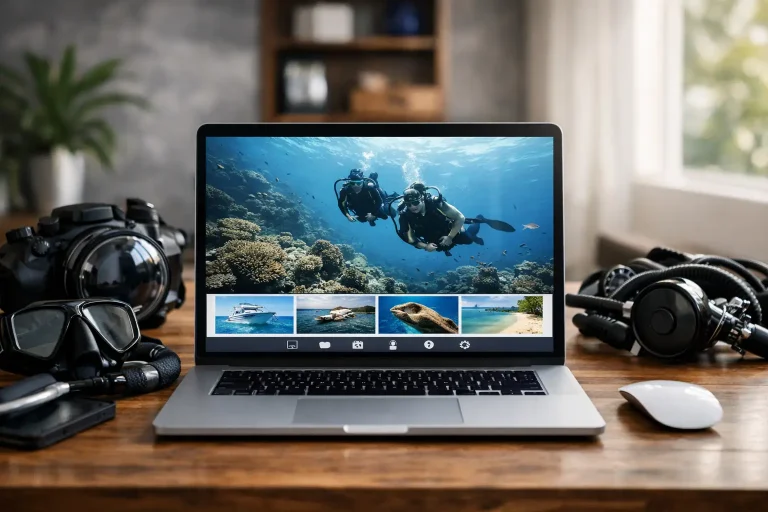
Build pages with clear headings, readable text, sufficient color contrast, descriptive form labels, keyboard-friendly navigation, and images that include meaningful alternative text. Avoid placing essential information only in image-based flyers, social media graphics, or PDFs that cannot be searched or read effectively by assistive technology. Video content should include accurate captions, especially for safety briefings, course previews, and operational updates.
Online booking deserves particular scrutiny. Customers should be able to identify accessibility features, ask for accommodations, and receive a response before payment or travel commitments create pressure. Keep the request process private and straightforward. A short optional question such as, “What can we do to support your participation?” is more useful than a generic note field that staff may overlook.
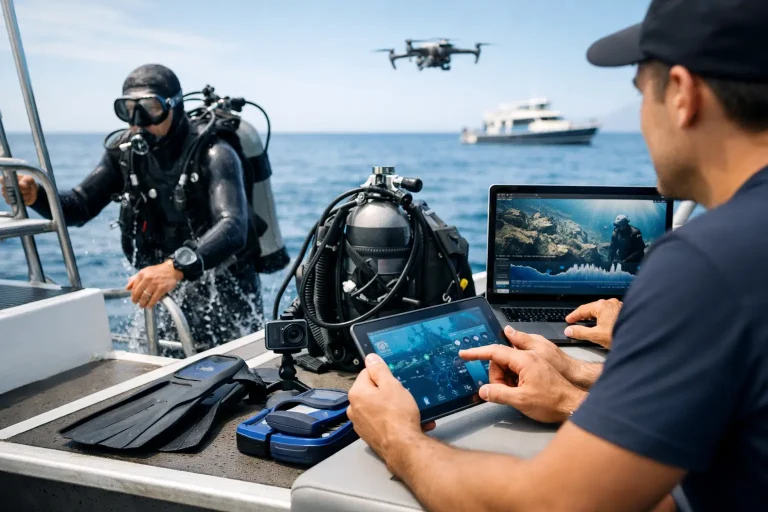
This is where purpose-built operational technology can create meaningful gains. A connected dive center platform can preserve accommodation notes with appropriate permissions, trigger pre-trip checklists, assign follow-ups, and ensure that instructors, retail staff, and boat crews receive only the information needed to prepare safely. Systems should support consent and privacy, not turn a guest’s personal information into a label that follows them everywhere.
Digital tools also strengthen continuity. If a customer has discussed a preferred communication method, equipment setup, or transfer support, that information should not disappear when the original staff member is off duty. Consistent records reduce repetition for the customer and uncertainty for the team.
Train Staff to Ask, Listen, and Plan
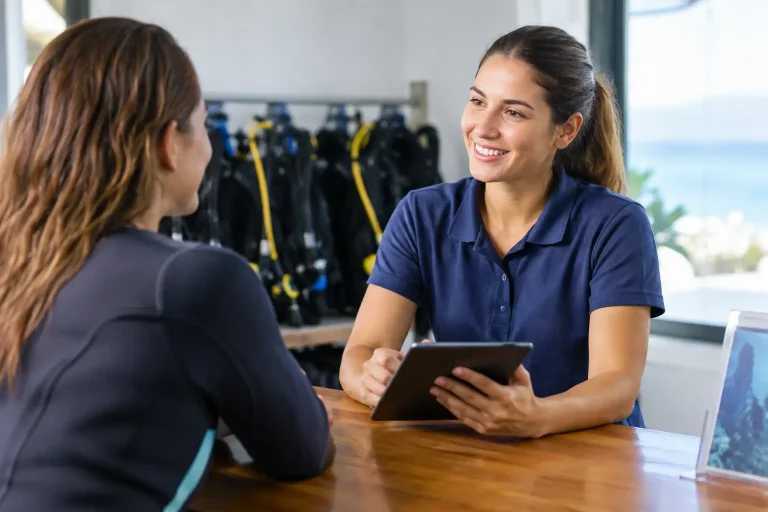
The most sophisticated facility and software cannot compensate for poor interaction. Accessibility training should give staff confidence without encouraging them to overstep. The starting point is simple: ask the customer what support would be useful, listen to the answer, and focus on the actual activity and safety conditions.
Staff should avoid guessing from appearance, speaking to a companion instead of the diver, touching mobility equipment without permission, or treating an accommodation request as a disruption. They should also know when an instructor, captain, medical professional, or adaptive diving specialist needs to be part of the conversation.
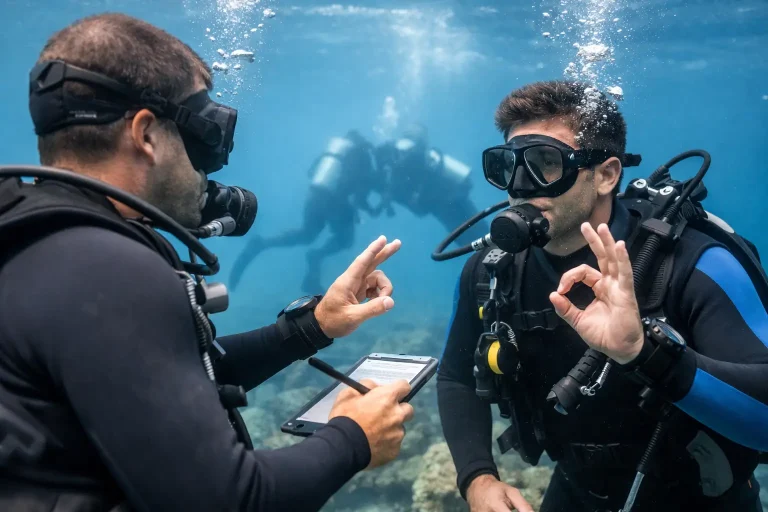
Build accessibility into onboarding, trip planning, and incident review rather than offering a one-time sensitivity session. Discuss scenarios that reflect real operations: a student who needs course material in an accessible format, a diver with limited dexterity during equipment setup, a guest who communicates best in writing, or a traveler who requires clear mobility details before committing to a charter.
Document decisions in plain language. If a particular procedure is necessary for a specific site or vessel, explain why. If an alternative can be offered, define it. Clear documentation protects both the guest experience and the team’s safety culture.
Improve Communication Before It Becomes a Problem
Accessibility information should be easy to find and specific enough to be useful. “All are welcome” is a positive sentiment, but it does not tell someone whether there is step-free entry, an accessible restroom, help moving equipment, captions in digital learning materials, or a feasible route onto a boat.
Create a concise accessibility page and keep it current. Describe physical features, available support, common trip conditions, equipment options, communication channels, and the best lead time for requests. State limitations candidly. A diver can plan around a known constraint; they cannot plan around vague reassurance.
The same principle applies to customer communications. Send itineraries early, use plain language, identify terrain and transfer points, and make last-minute changes visible across all channels. A weather relocation, dock change, or boat substitution can alter accessibility dramatically. Operational updates are not merely logistical messages – they can determine whether a guest can participate safely.
Measure Progress With Real Feedback
Accessibility improves through iteration, not declarations. Invite feedback after courses, retail visits, and trips, then track recurring obstacles. Review cancellation reasons, unanswered inquiries, accommodation lead times, and points where staff had to improvise. These signals reveal whether the business is building a repeatable service or relying on goodwill under pressure.
Include divers with disabilities and adaptive diving professionals in testing whenever possible. They will often identify barriers that internal teams do not see, particularly in handoffs between digital booking, on-site arrival, and water access. Compensate advisors for their time when the work goes beyond casual feedback.
Some changes require capital investment. Others require a clearer website, a better question in a form, two extra staff minutes at gear staging, or a shared operational checklist. Start with the barriers that prevent participation now, then develop a funded roadmap for larger changes.
A more accessible dive shop does more than widen the customer base. It demonstrates that diving’s standards of safety, competence, and respect apply before descent as much as they do underwater. The next improvement may be small, but for the diver who has been deciding whether they belong, it can be the difference between watching from shore and becoming part of the community.