Why Do Divers Forget Theory After Certification?
A diver can recall the feeling of a calm descent years after certification, yet hesitate when asked to explain partial pressure, calculate a no-decompression limit, or identify the first step in a low-on-gas response. Why do divers forget theory when the consequences of weak recall can extend well beyond a missed quiz question?
The short answer is not that divers are careless or that training failed. Most certification courses ask people to absorb a large amount of new information while also managing equipment, water skills, schedules, and the emotional load of learning to breathe underwater. Once the course is complete, theory is often treated as finished business. But diving knowledge is not a one-time achievement. It is a safety capability that needs to remain available under changing conditions.
For divers, instructors, and dive center operators, this is an education design problem as much as an individual responsibility. Understanding why knowledge fades creates a clearer path toward training that lasts.
Did you know that Millibar provides free resources to help you keep your diving knowledge fresh and expand it over time? Explore Millibar Theory to revisit diving concepts and continue learning, or challenge yourself with Quest – Dive Quiz to find out how much you really remember. Both are completely free and designed to make continuous learning part of your life as a diver.
Why Do Divers Forget Theory? Memory Has a Predictable Pattern
People forget information they do not retrieve. This is a basic property of human memory, not a weakness unique to diving. A student may understand Boyle’s law during a course, answer the relevant questions correctly, and still struggle to apply it 18 months later if they have not encountered a situation that requires the concept.
Certification programs compress learning into a short period. Students move from basic physics and physiology to equipment systems, emergency procedures, dive planning, and open-water execution in days or weeks. That intensity can produce strong short-term performance. It does not automatically create durable long-term recall.
The problem is amplified by recognition versus retrieval. Reading a familiar answer in a manual can feel like knowing it. Producing the answer without prompts is different. A diver who recognizes that nitrogen absorption increases with depth may still be unable to explain how that affects a multilevel profile, a conservative computer setting, or a decision to end a dive early.
This distinction matters because real dives rarely present knowledge as a multiple-choice question. They present cues: an unexpected depth, a buddy breathing harder than usual, a current that changes the plan, or a cylinder pressure that falls faster than expected. The diver must retrieve the right principle and turn it into action.
Certification Is a Starting Point, Not a Knowledge Lifetime
Entry-level courses have a demanding and necessary job: they establish a safe baseline. They cannot turn every new diver into a confident planner for every environment, equipment configuration, or physiological question. A newly certified diver should leave with boundaries, judgment, and a commitment to keep learning, not an assumption that all relevant theory is permanently stored.
Yet the industry can unintentionally reinforce the opposite message. Certification cards are durable. Knowledge checks are often concentrated before qualification. Afterward, many divers interact with theory only when a course requires it, a dive computer displays an alert, or an instructor asks a question on the boat.
Infrequent divers face the steepest decline. Someone who makes four vacation dives each year may retain buoyancy instincts and basic hand signals while losing less visible concepts such as gas planning assumptions, ascent-rate rationale, oxygen exposure limits, or the relationship between depth and gas density. Even active divers can develop gaps if every dive follows the same familiar pattern.
Experience helps, but it is not a substitute for understanding. Repeating a routine can build smooth habits. It can also hide a weak mental model until conditions change. A diver accustomed to shallow, warm, guided reef dives may have little reason to revisit theory until moving into cold water, altitude, overhead environments, enriched air, sidemount, or more complex profiles.
The Operational Cost of Theory That Stays in the Classroom
Forgotten theory does not always create an obvious incident. More often, it shows up as dependence. Divers wait for a guide to decide whether conditions fit the plan. They follow computer displays without understanding the assumptions behind them. They use enriched air but cannot confidently discuss analysis, labeling, maximum operating depth, or the practical meaning of a chosen mix.
That dependence puts pressure on instructors, divemasters, and operators. A dive team functions better when participants can explain the plan, recognize when it no longer applies, and raise a concern early. It also improves customer experience. Confident divers ask better questions, make more informed course decisions, and are more likely to progress responsibly.
For dive centers, this creates a business issue as well as a safety issue. A fragmented customer journey often separates course materials, certification records, waivers, trip briefings, equipment notes, and follow-up communication. When learning data disappears after checkout, there is no simple way to identify which concepts deserve reinforcement before the next trip or course.
The answer is not to burden divers with constant testing. It is to make useful knowledge easier to revisit at the moments when it has meaning.
Reinforcement Works Best When It Is Small and Timely
Long refresher sessions have value, especially before a return to diving after a substantial break. But durable learning is usually built through smaller, repeated encounters. A two-minute question about gas consumption before a deeper dive can be more effective than rereading an entire chapter once a year. A short scenario after a boat briefing can connect theory directly to the decisions divers are about to make.
The most effective reinforcement has three characteristics: it requires active recall, appears over time, and is tied to context. Active recall means asking the diver to generate an answer rather than merely reread one. Spacing means revisiting a concept after days, weeks, and months instead of repeating it only during the original course. Context means connecting knowledge to a real plan, environment, or equipment choice.
For example, rather than asking a generic question about nitrogen narcosis, an instructor might ask a group what changes they would make if a diver felt unusually anxious and impaired at depth. Rather than reviewing gas laws in isolation, a center can connect pressure-volume relationships to buoyancy changes on ascent, cylinder management, and suit selection.
This approach also respects adult learners. Most divers do not want to return to school. They want to make better decisions, understand what their computer is telling them, and feel prepared for the dive in front of them. Education that is relevant, brief, and available on demand is more likely to become part of a diver’s routine.
A Better Role for Digital Learning Tools
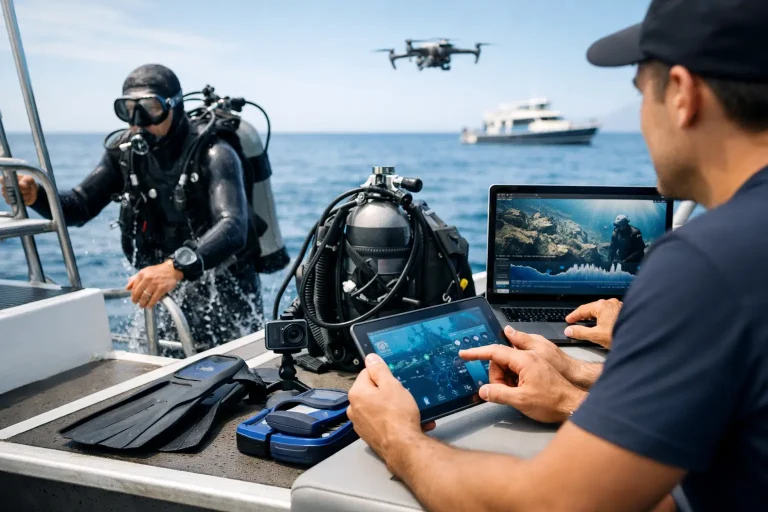
Digital tools can support continuing education without turning diving into a stream of notifications and scores. The goal is not surveillance or gamification for its own sake. The goal is a connected learning loop between initial training, actual diving, planned progression, and refreshers.
A mobile-first quiz or learning tool can surface short, scenario-based prompts before a trip, after a certification milestone, or when a diver is considering a specialty course. Theory practice can be lightweight enough to fit into normal life while still challenging enough to reveal what has been forgotten.
This is the thinking behind two free resources we have created at Millibar. Millibar Theory gives divers a place to explore and revisit diving concepts whenever they want to refresh or extend their knowledge. Quest – Dive Quiz takes an active-recall approach, using short questions across different areas of diving knowledge to challenge what you actually remember.
Neither is intended to replace certification materials, professional instruction, or practical training. Instead, they provide something that formal courses cannot always provide on their own: an easy way to keep interacting with diving knowledge between courses and dives.
For instructors, digital reinforcement can provide a clearer picture of common weak areas across a class. If many students struggle with buoyancy physics, emergency ascent priorities, or enriched-air limits, that signal can shape the next briefing or pool session. For operators, it can support better pre-trip preparation without replacing professional judgment or in-person instruction.
There are trade-offs. A quiz cannot assess comfort in the water, situational awareness, trim, or stress response. A learning platform cannot decide whether a diver is ready for a demanding environment. Technology should strengthen the instructor-diver relationship, not automate it away. Its best contribution is continuity: keeping essential knowledge visible between the moments when formal training occurs.
What Divers and Dive Businesses Can Do Now
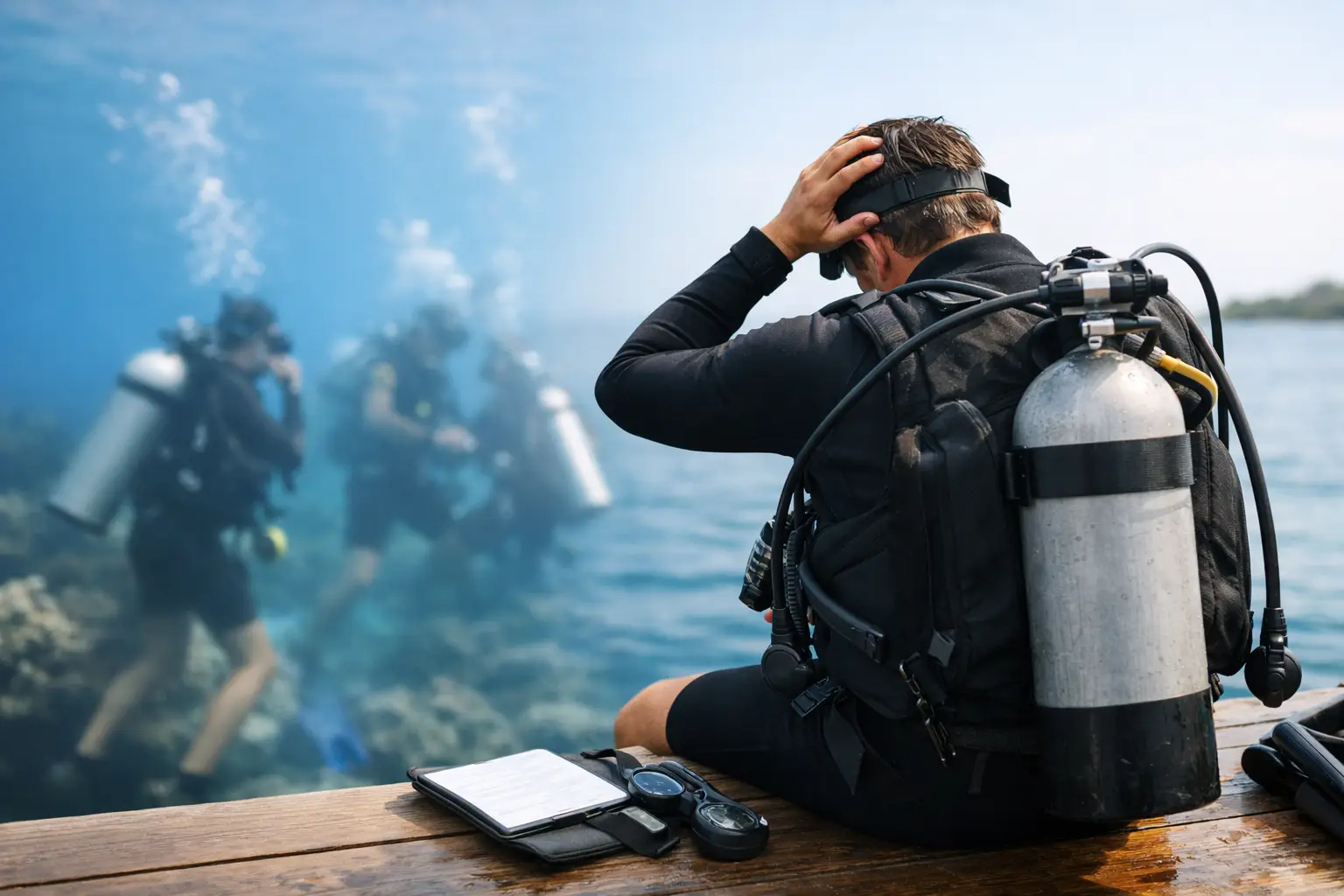
Divers can treat theory as part of dive readiness. Before a trip, review the principles most relevant to the planned depth, exposure, gas, equipment, and environment. After a layoff, choose a formal refresher or work with an instructor rather than relying on memory alone. When a concept feels vague, ask before entering the water. Questions are a sign of sound judgment.
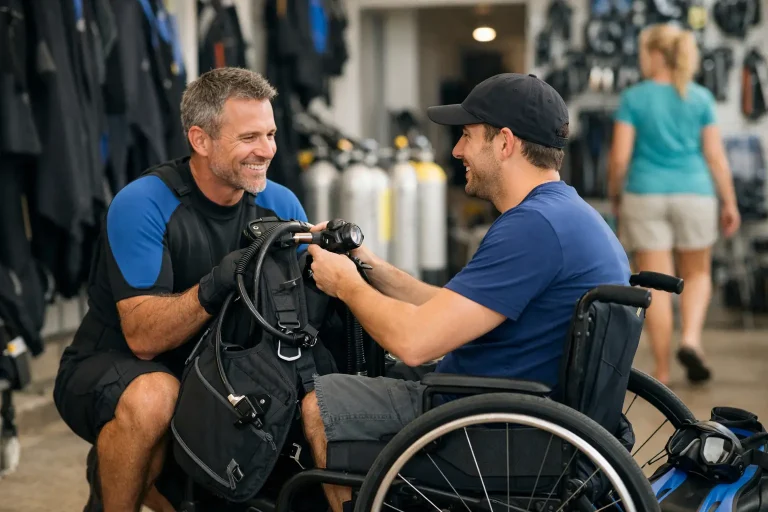
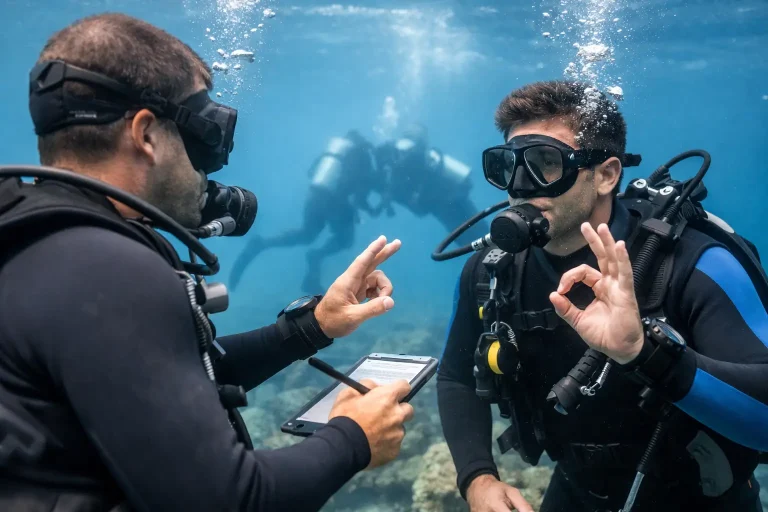
Instructors can build retrieval into normal teaching rather than reserving it for final exams. Ask learners to explain decisions aloud. Use changing scenarios instead of repeating memorized wording. Revisit foundational concepts in advanced courses, because progression should deepen understanding rather than assume it.
Dive center operators can make education a continuing service. A post-course message, a pre-trip knowledge check, or a targeted refresher recommendation can turn a disconnected transaction into a longer safety relationship. The right digital infrastructure makes those touchpoints manageable for busy teams and more useful for customers.
Theory is easy to overlook because a successful dive can feel like proof that nothing needs attention. But safe diving depends on more than what went right last time. The next useful question before a dive is not whether a diver once passed the exam. It is whether they can still explain the decision they are about to make.