Guide to Continuing Diver Education for Safer Skills
A certification card confirms that a diver met a standard on a particular day. It does not guarantee that buoyancy remains precise after a year away from the water, that emergency responses are still automatic, or that a diver can make sound decisions when conditions change. A guide to continuing diver education should begin with that distinction: training is not a one-time transaction. It is a long-term safety practice that protects divers, strengthens instructors, and raises the operating standard of dive centers.
For an industry built on competence, continuing education is also an operational issue. When learning is fragmented across paper manuals, forgotten logbook notes, and occasional courses, knowledge fades between dives. A more connected approach can help divers retain theory, practice practical skills with intent, and document a learning journey that matters beyond the next certification.
Why continuing education matters after certification
Entry-level training establishes a foundation. Divers learn core equipment skills, basic planning, environmental awareness, and emergency procedures. But real competence develops through repetition, reflection, feedback, and exposure to progressively more varied situations. A newly certified diver may be capable within the limits of their training while still lacking the experience to manage current, low visibility, task loading, unfamiliar equipment, or an anxious buddy.
Continuing education closes the gap between what a diver once demonstrated and what they can consistently do. This is not an argument for collecting specialty cards. A course can be valuable, but only when its purpose is clear and its learning transfers to future dives. A drysuit course before a cold-water trip, for example, can reduce risk substantially. Taking several specialties without applying the skills may create a false sense of readiness.
For dive professionals, the same principle applies at a different level. Instructors need current teaching methods, refreshed rescue judgment, stronger accessibility practices, and familiarity with new tools and standards. Dive center teams need shared procedures that do not depend on one experienced staff member remembering every detail. Continuing education becomes part of quality control.
Build a continuing diver education plan around real goals
The most useful development plans start with the dives a person actually wants to make, not the certifications that happen to be available. A diver planning warm-water reef trips has different needs from someone moving toward local cold-water diving, underwater photography, scientific support, or technical pathways.
Start by identifying the next 12 months of likely diving. Consider destination conditions, water temperature, depth range, overhead environments, physical demands, equipment changes, and the type of buddy team involved. Then assess where confidence is not yet supported by recent practice. The resulting plan should be specific enough to guide action but flexible enough to change with experience.
A strong plan usually combines three forms of development: formal instruction, deliberate practice, and knowledge reinforcement. Formal instruction provides structure and qualified feedback. Practice turns individual skills into reliable habits. Knowledge reinforcement keeps planning principles, physics, physiology, and emergency procedures available when they are needed.
Choose training for competence, not status
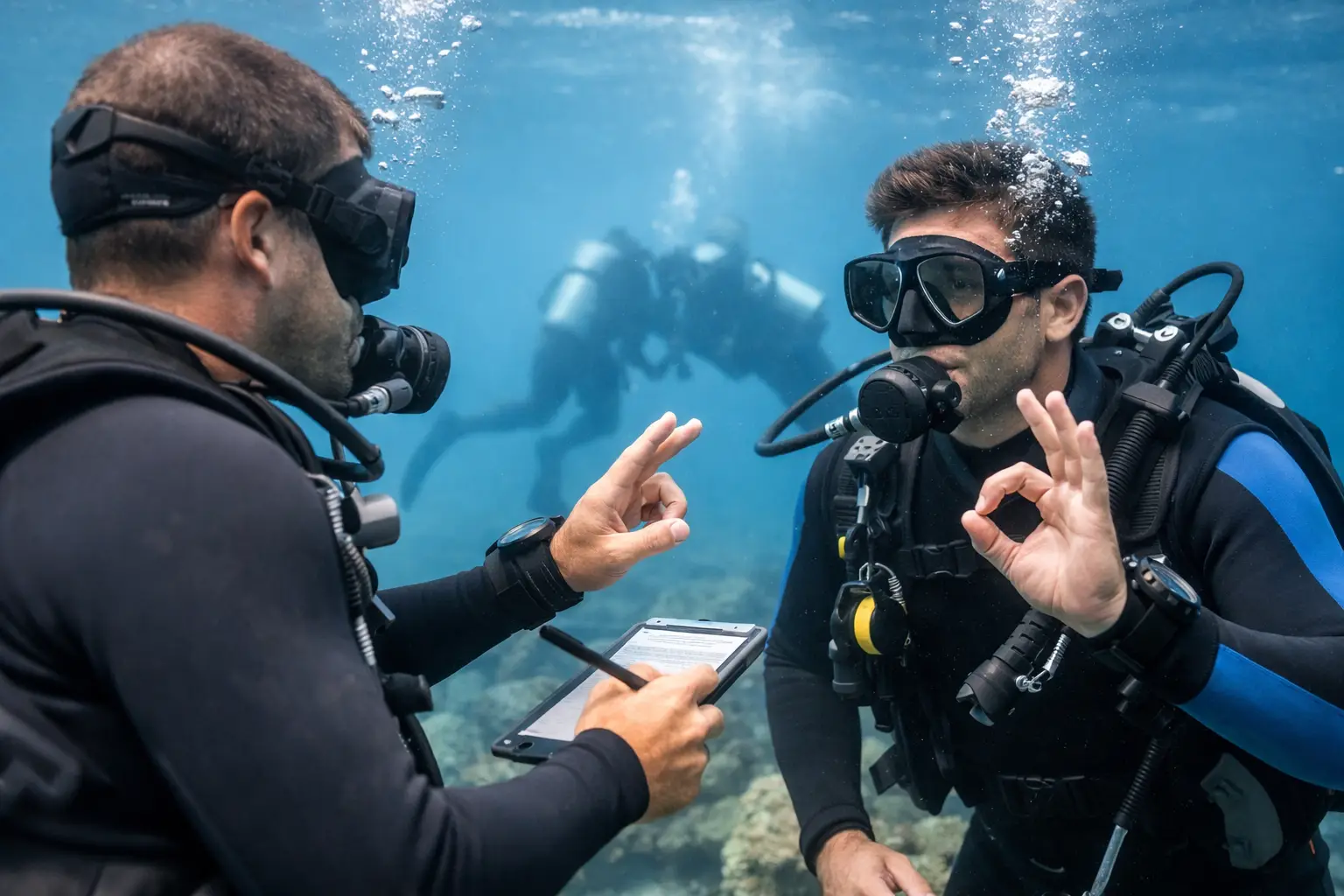
Specialty programs are most valuable when they solve a practical need. Navigation training can improve confidence and reduce separation risk on unfamiliar sites. Rescue refreshers build observation, response, and team communication skills. Nitrox education supports more informed gas planning when it is paired with disciplined analysis and documentation. Equipment-focused sessions can be useful when a diver changes configuration or begins using tools such as a drysuit, DPV, or computer with more advanced planning features.
The trade-off is time and attention. A diver who takes courses too quickly may have little opportunity to consolidate the previous one. In many cases, the right next step is not another certification. It is several guided dives focused on trim, propulsion, situational awareness, or deployment of an SMB. The goal is dependable performance, not a longer list of credentials.
Treat theory as a living skill
Theory is often treated as something to pass before certification and then forget. That approach leaves divers dependent on devices without understanding the assumptions behind them. Computers, gas analyzers, and planning tools are valuable, but they do not replace the judgment required to use them correctly.
Regular short reviews are more effective than trying to relearn everything before a trip. Revisiting gas laws, decompression concepts, air consumption, ascent planning, and oxygen exposure helps divers recognize when a plan does not make sense. A quick knowledge check before a dive weekend can reveal gaps that would otherwise remain invisible.
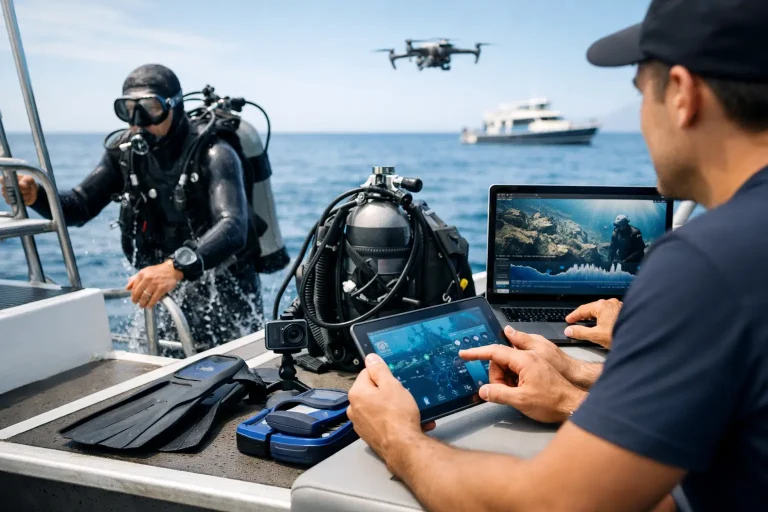
Digital learning tools can make this easier by giving divers mobile access to focused questions, scenario-based practice, and progress history. The opportunity is not to turn education into more screen time. It is to use technology to reinforce the right concepts at the right interval, then bring that learning back to real-world decisions underwater.
Make practice measurable and honest
Experience is not simply the number of dives in a logbook. Fifty relaxed dives on a familiar shallow site may build comfort, but they do not necessarily prepare someone for a cold, current-exposed wall dive with a new buddy. Dive count is useful context, not a universal measure of readiness.
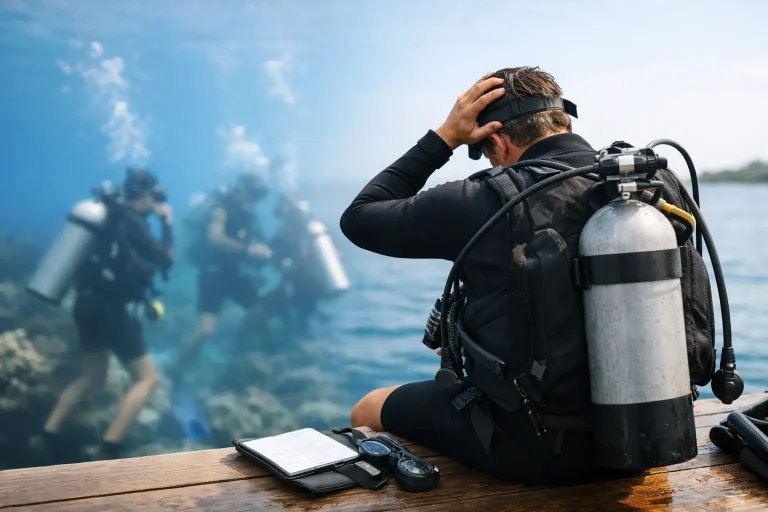
Divers should record more than date, depth, and location. Notes about visibility, current, exposure protection, weighting, equipment changes, air use, communication, navigation, and lessons learned create a far more useful record. Over time, patterns become visible. Perhaps buoyancy slips when a camera is added. Perhaps air consumption rises in current. Perhaps navigation problems occur when the group gets larger.
This type of reflection is especially effective when it leads to one concrete practice goal for the next dive. A diver might decide to hold a stable stop while deploying an SMB, complete a full pre-dive gas check without prompts, or improve finning technique around fragile reef areas. Small, observable goals make development less vague and more sustainable.
What dive centers and instructors should change
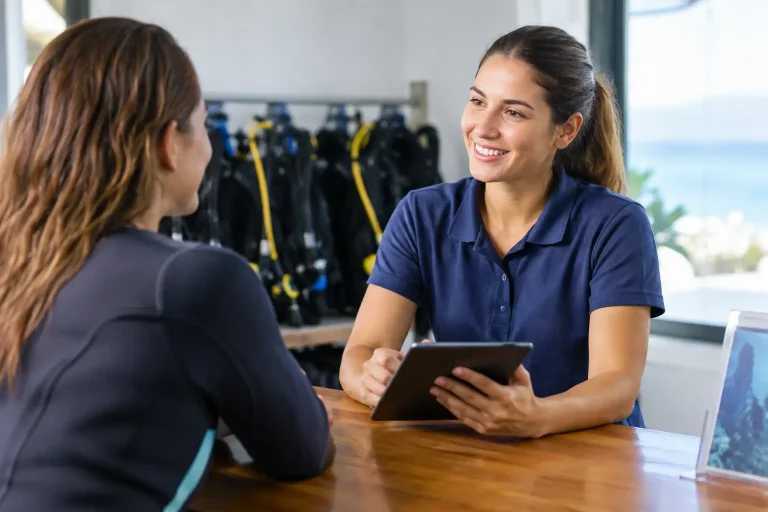
Continuing education should not depend entirely on a diver returning to buy another course. Centers can create stronger learning cultures through post-course follow-up, skill clinics, theory refreshers, guided practice dives, and clear pathways based on local conditions. These offerings serve safety and customer retention at the same time, provided they are designed as genuine support rather than sales pressure.
The operational challenge is consistency. A center needs to know which students completed which training, what equipment they use, whether they have recent experience, and which follow-up opportunities are appropriate. Generic customer relationship systems rarely reflect the realities of dive education, waiver cycles, medical documentation, equipment service, and course prerequisites.
Purpose-built systems can connect these points without reducing a diver to a database record. Millibar’s approach to digital diving infrastructure reflects this need: education, operations, and communication work best when they reinforce each other. An instructor who can see a diver’s prior learning and stated goals can recommend a more relevant next step. A center that can automate thoughtful reminders can keep skills and safety conversations active between trips.
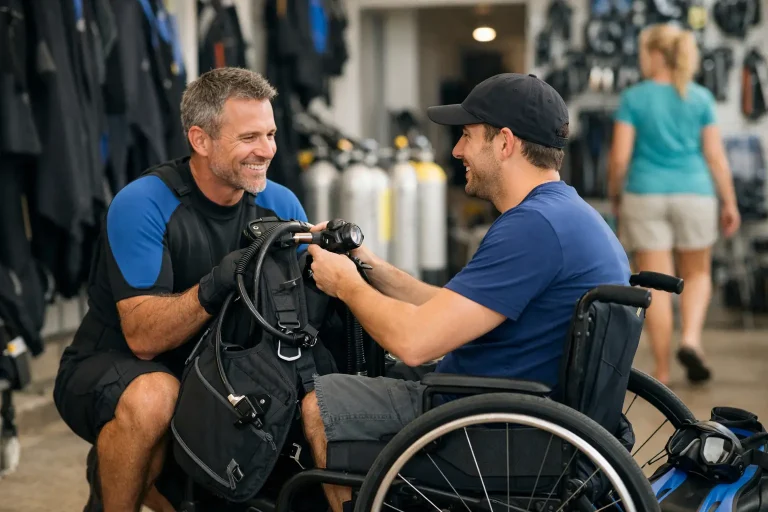
Accessibility must also be part of the design. Adult learners arrive with different language backgrounds, physical needs, confidence levels, and comfort with digital tools. Clear content, flexible review formats, and inclusive teaching practices improve outcomes for more people. Standardization should raise clarity, not force every diver into the same path.
A guide to continuing diver education that supports better decisions
A practical rhythm is more valuable than occasional bursts of motivation. Before a planned trip, review the conditions, equipment, and key theory. During the trip, set one skill objective and ask for feedback. Afterward, log what happened while details are fresh and decide what deserves attention next. Every six to twelve months, reassess goals, recent experience, and any training that needs renewal or a deeper level.
There is no universal schedule. A diver who is active year-round may benefit most from targeted coaching and advanced scenario work. Someone returning after a long break may need a structured refresher before adding new challenges. Professional divers and instructors may require more frequent practice because others depend on their judgment. The right plan reflects exposure, responsibility, environment, and personal goals.
The strongest continuing education programs do not make divers feel permanently behind. They make learning visible, manageable, and connected to the dives people want to do. Each review, practice session, and well-chosen course should produce a little more calm, awareness, and capability. That is the standard worth carrying into every descent.