7 Trends in Dive Industry Digitization
7 Trends in Dive Industry Digitization
A diver completes check-in on their phone before arriving — signs every form, provides the required information, and gets automated reminders about equipment and conditions — then walks into a dive center where staff already know their certification history, rental needs, and schedule. That is no longer a niche scenario. It reflects the real direction of trends in dive industry digitization, and it is changing how training, operations, and customer experience work across the sector. It is also exactly what our Diving Experience Manager is built for.
For years, diving has relied on a patchwork of paper forms, inbox threads, messaging apps, spreadsheets, and generic booking tools. That approach can still function, especially for smaller operations, but it creates friction in the places diving can least afford it: safety communication, training continuity, staff coordination, and customer trust. Digitization in diving is not about adding technology for its own sake. It is about building systems that support safer decisions, better learning, and more resilient businesses.
Why trends in dive industry digitization matter now
The pressure is coming from several directions at once. Divers expect the same clarity and convenience they get in other parts of travel, education, and recreation. Instructors need better ways to reinforce theory outside the classroom. Dive centers are dealing with labor constraints, seasonal demand, rising costs, and increasing complexity in customer communication. At the same time, the industry is being asked to improve accessibility and reduce operational blind spots.
That combination makes digitization less of a competitive extra and more of a structural shift. Still, the right pace depends on the business. A high-volume training facility has different needs from a small charter boat or a boutique destination center. The important question is not whether every operation should adopt every tool. It is whether their current systems actively support safety, learning, and sustainable growth.
1. Operations are moving from fragmented tools to connected systems
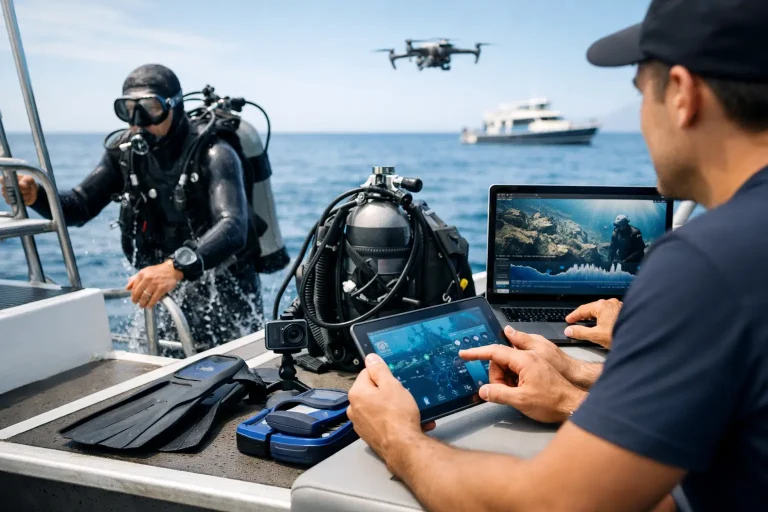
One of the clearest trends in dive industry digitization is the move away from disconnected software and manual workarounds. Many dive businesses still run bookings in one platform, customer records in another, waivers on paper, staff schedules in chat threads, and follow-up communication by hand. That creates duplicate work and missed context.
Connected operational systems change the picture. When bookings, diver profiles, training progress, waivers, equipment allocation, and communication sit in the same workflow, staff spend less time chasing details and more time managing the experience itself. The gain is not just speed. It is consistency.
There is a trade-off, though. Connected systems require process discipline. If a center runs on informal habits that live only in the heads of experienced staff, software will expose that quickly. The technology is only as good as the operational clarity behind it.
2. Customer communication is becoming proactive, not reactive
A large portion of avoidable friction in dive operations comes from incomplete or late communication. Divers arrive without the right documentation. Students forget pre-course study. Certified guests are unclear on check-in times, local conditions, or what gear is included. Staff then spend valuable time correcting preventable gaps.
Digitized communication flows solve this by shifting from one-off replies to structured, timed messaging. Pre-arrival reminders, digital intake, training prompts, post-dive follow-up, and review requests can all be handled with far more consistency than ad hoc email alone.
This matters because diving involves layered information, not simple transactions. A discover scuba participant, an advanced student, and a tech diver do not need the same communication. Better systems let operators tailor what is sent, when it is sent, and why it matters.
Automation also has limits. Poorly written reminders can feel impersonal or create confusion at scale. The strongest digital operations use automation to support human service, not replace it.
3. Diver education is extending beyond the classroom and pool
Training is one of the areas where digitization can have the longest-lasting impact. Traditional scuba education often concentrates theory into short bursts, then expects divers to retain and apply it under pressure or over time. That model works unevenly, especially for adult learners juggling travel schedules, work, and different learning speeds.
Digital learning tools allow theory reinforcement before, between, and after sessions. Mobile-first quizzes, targeted review, visual explanations, and repeatable practice help students build stronger recall instead of just passing the immediate assessment. For instructors, this creates a way to identify weak spots earlier and use in-person time more effectively. This is exactly the gap our mobile app MBAR Quest addresses: short quizzes and challenges that make refreshing dive theory feel like a game rather than a chore.
This is not an argument for replacing instructors with apps. Diving is a practical discipline built on judgment, supervision, and environmental awareness. But digital reinforcement makes instructor-led education stronger when it is used with intent.
It also creates opportunities for continuing education after certification. That is a major gap in the industry. Many divers want to stay sharp on physics, gas planning, procedures, and risk awareness, but the tools for that have historically been limited or scattered.
4. AI is entering diving through workflows first
There is growing interest in AI across the dive sector, but the most useful applications are not the flashy ones. They are the operational and educational tasks that consume time, create inconsistency, or depend on fast access to accurate information.
AI can help draft customer responses, organize inquiry flows, support knowledge retrieval, personalize learning review, and reduce repetitive admin work for instructors and dive center teams. In a busy operation, even small gains in response time and information quality can materially improve customer confidence and staff workload.
That said, diving is a safety-critical environment. AI should support decisions, not act as the final authority on them. Any use of AI in diver education, gas planning, procedural support, or operational guidance needs clear boundaries, human oversight, and domain-specific design. Generic AI layered onto diving without validation is not innovation. It is risk.
The organizations that benefit most will be the ones that treat AI as an assistant inside a well-designed system, not a shortcut around expertise.
5. Specialized tools are replacing generic software in critical areas
For a long time, many dive businesses had little choice but to adapt generic business tools to highly specific diving workflows. That worked up to a point, but it often meant safety forms that were awkward to manage, course tracking that lacked context, and customer databases that did not reflect real diver needs.
A more mature software layer is now emerging around the underwater sector. Purpose-built tools for dive operations, nitrox planning, theory practice, certification-related workflows, and diver support are starting to replace the one-size-fits-all approach.
This shift matters because diving is not just another appointment business. It combines training, environmental exposure, equipment dependency, physical readiness, and procedural discipline. Software designed for restaurants, gyms, or general tours can handle pieces of that, but rarely the full picture.
Specialization, however, can create another challenge: tool sprawl. If every function is solved by a different niche app, operators end up back in the fragmentation problem they were trying to escape. The next phase of digitization will depend on interoperability and shared standards, not just more products.
6. Accessibility and inclusion are becoming digital design issues
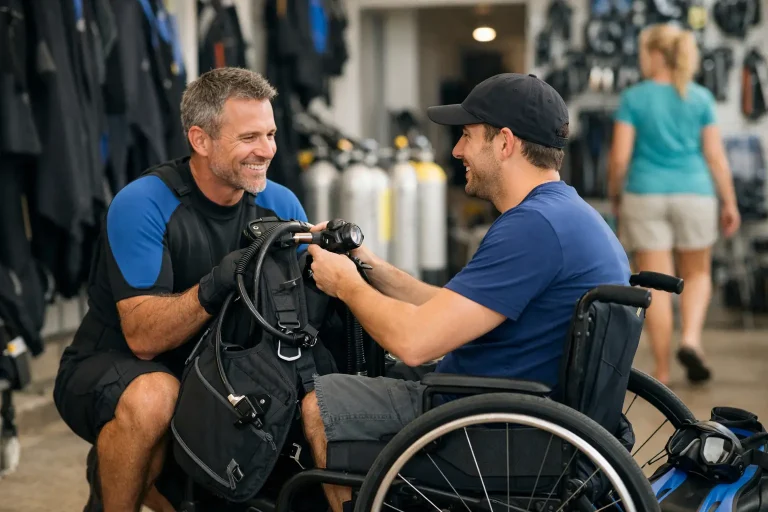
The future of diving depends in part on who can access it, understand it, and continue learning within it. Digitization plays a direct role here. Clear interfaces, mobile access, readable educational content, multilingual pathways, adaptive learning support, and better pre-arrival communication all reduce barriers.
This is often framed as a customer experience upgrade, but it is bigger than that. Accessible digital systems help new divers prepare with more confidence, reduce misunderstanding in training, and support a wider range of learning styles and backgrounds.
There is still work to do. Many industry touchpoints remain hard to use, inconsistent across devices, or dependent on insider knowledge. A modern dive business should think about accessibility not only at the dock or in the classroom, but in every digital interaction that happens before and after the water.
7. Data is starting to inform decisions, not just record them
Many dive operators collect data without truly using it. They store bookings, certifications, waivers, and transaction history, but the information rarely feeds back into better planning. Digitization changes that when systems are designed to surface patterns.
Centers can start to see which courses convert best, when customers drop out of booking flows, what questions repeatedly delay check-in, which reminders reduce no-shows, and where staffing pressure builds during peak periods. In education, instructors can identify common theory weak points and adjust reinforcement earlier.
The caution here is obvious. More data does not automatically mean better judgment. If teams track the wrong metrics, they can optimize for convenience over learning quality, or volume over safety. Useful data in diving should sharpen operational awareness and educational outcomes, not flatten them into vanity dashboards.
What the industry should watch next
The next few years will likely be defined less by isolated apps and more by ecosystem thinking. The strongest digital models in diving will connect education, operations, communication, planning, and long-term diver support. They will also be shaped by open standards, better data portability, and more collaboration across the industry.
That is where the conversation becomes strategic. Digitization is not only about helping one center run faster. It is about creating a more competent, accessible, and resilient diving environment overall. When diver learning is reinforced, when information moves cleanly across workflows, and when businesses spend less time fighting admin chaos, the whole sector benefits.
At Millibar, this broader view matters because the industry does not need more disconnected technology. It needs digital infrastructure that respects how diving actually works.
The businesses and educators that move early do not need to digitize everything at once. They need to identify the friction that most affects safety, learning, and customer confidence, then solve it with systems designed for diving. Done well, digitization does not make the industry less human. It gives professionals more space to focus on the parts of diving that matter most.