
How to Modernize Dive Center Workflows
A full boat, three WhatsApp threads, paper waivers on a wet counter, one instructor chasing student records, and a last-minute equipment issue before departure. This is still a normal morning at many dive operations.
The question is not simply how dive centers can adopt more technology. It is how the diving industry can build workflows that keep up with safety requirements, customer expectations, staff coordination, and growth without creating another layer of disconnected tools.
For most dive businesses, modernization does not begin with replacing everything at once. It begins by identifying where work is duplicated, information becomes fragmented, and teams depend on memory instead of shared systems. In diving, these gaps affect more than efficiency. They can influence training quality, customer confidence, operational control, and continuity throughout the diver journey.
What modernizing dive center workflows actually means
Modernization is often misunderstood as buying software and expecting operational friction to disappear. In practice, it means redesigning how information moves through the business.
A diver inquiry becomes a booking, if the reply is timed and accurate. A booking leads to documentation, certification checks, scheduling, equipment preparation, staff assignments, payments, and post-dive communication. When these steps live across different inboxes, messaging apps, spreadsheets, clipboards, and personal devices, staff must manually reconnect the workflow every day.
A modern workflow should be connected, visible, and designed around the realities of diving. Staff should know what needs to happen next without chasing context. Instructors should not have to re-enter information that already exists. Divers should not have to rebuild their profile or submit the same details every time they interact with a new center.
This does not mean automating every decision. Dive operations depend on professional judgment, particularly around medical considerations, diver readiness, training progression, environmental conditions, and customer care. Technology should strengthen that judgment by reducing administrative work and making relevant information easier to access.
How to modernize workflows without creating new fragmentation
Digitizing an inefficient process does not necessarily improve it. Before selecting tools, operators should map the journey from first contact through check-in, diving activities, training, and post-dive engagement.
Common friction points quickly become visible: bookings arriving through multiple channels, documents collected too late, staff and boat schedules maintained separately, customer information repeatedly entered, and communication depending on whoever happens to be available.
The first priority should be the workflows where operational risk and administrative effort are highest. For many centers, this means customer intake, documentation, planning, communication, equipment coordination, and training administration.
Build a connected operational core
When courses, fun dives, staff rosters, rentals, documents, and payments are managed separately, the problem is not only inconvenience. The operation lacks a shared and reliable view of what is happening.
A modern system needs an operational core connecting diver profiles, activities, documentation, resources, and staff responsibilities. It does not need to solve every possible scenario immediately, but it should establish where current and reliable information lives.
Generic scheduling tools often struggle here because diving is not a standard appointment business. Certification prerequisites, training progression, boat capacity, rental equipment, tanks, gas requirements, no-fly considerations, and changing conditions all influence daily planning.
This domain complexity is one reason Millibar is developing the Diving Experience Manager: not as another isolated booking tool, but as part of a broader DiveTech infrastructure connecting workflows, information, and the diver experience.
Fix customer communication before increasing volume
Some centers appear to have a lead-generation problem when they actually have a communication problem. Slow replies, missing pre-arrival information, inconsistent reminders, and unclear check-in instructions can create drop-off before the customer reaches the center.
Modern communication workflows should support confirmations, document collection, preparation, reminders, and operational updates at the appropriate stage. The goal is not to send more messages, but to make communication more relevant and reliable.
Automation can support repeatable interactions, while instructors and staff remain available for situations requiring expertise and empathy: course advice, individual concerns, anxiety, special requirements, or changes to a planned activity.
The workflows that matter most
Booking and diver intake
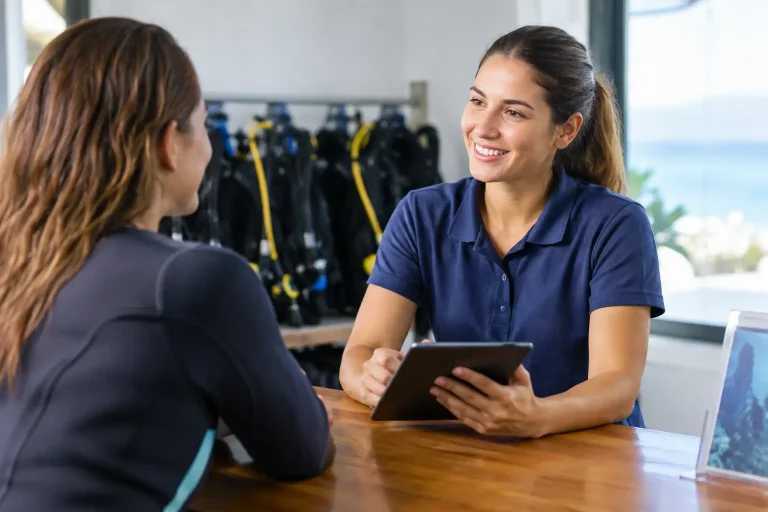
A modern intake process should collect information once and make it usable throughout the relevant workflow. This can include contact details, certification level, experience, rental needs, medical documentation, travel timing, language, and accessibility requirements.
Diving-specific logic matters. A guided dive, Discover Scuba experience, Open Water course, technical dive, and snorkelling activity do not require the same information or preparation.
Over time, a reusable digital diver profile can reduce repeated administration and create greater continuity between the diver, the operator, and future diving activities.
Training administration
Training information is still frequently distributed across paper, agency systems, messaging apps, spreadsheets, and instructor notes. This can make continuity difficult when several instructors or assistants are involved.
A connected workflow can make student status, theory preparation, practical progression, and pending documentation more visible. It should help instructors coordinate and support learners without creating additional administrative work.
This is also where Millibar’s background in technology, diving, and education becomes strategically important. Training is not merely another booking category. It is a structured learning journey that benefits from preparation, continuity, reinforcement, and follow-up.
Daily operations and coordination
Modern workflows should reduce the number of verbal handovers required to run a diving day. Activities, staff assignments, diver requirements, equipment preparation, transportation, and relevant customer notes should be visible to the people responsible for them.
The central problem is often not a lack of software, but fragmentation between systems. Each team member may be working hard while seeing only part of the operational picture. Connected infrastructure creates shared situational awareness and supports better decisions.
Post-dive continuity
The diver journey should not disappear when an activity or course is completed. Follow-up can reflect what the person actually did and help them continue their development.
A newly certified diver may benefit from theory reinforcement, equipment guidance, or information about the next suitable course. A traveling diver may want a reliable record of previous activities and an easier way to prepare for the next destination.
This creates value for both sides: divers gain continuity, while operators can build longer-term relationships instead of treating every interaction as an isolated booking.
Choosing technology built around diving
Not every dive center needs the same digital setup. A small seasonal operation may need a focused system for a few essential workflows. A training-intensive or multi-location business may require deeper planning, automation, and reporting.
What remains important is domain fit. If software cannot represent diver profiles, certification-related requirements, training pathways, equipment, resources, and safety-sensitive documentation, staff will continue filling the gaps manually.
The diving industry has spent years adapting generic software built for simpler appointment, tourism, or leisure businesses. Purpose-built DiveTech infrastructure can instead reflect how dive operations actually work while remaining flexible enough to connect with existing systems.
How AI fits into modern dive operations
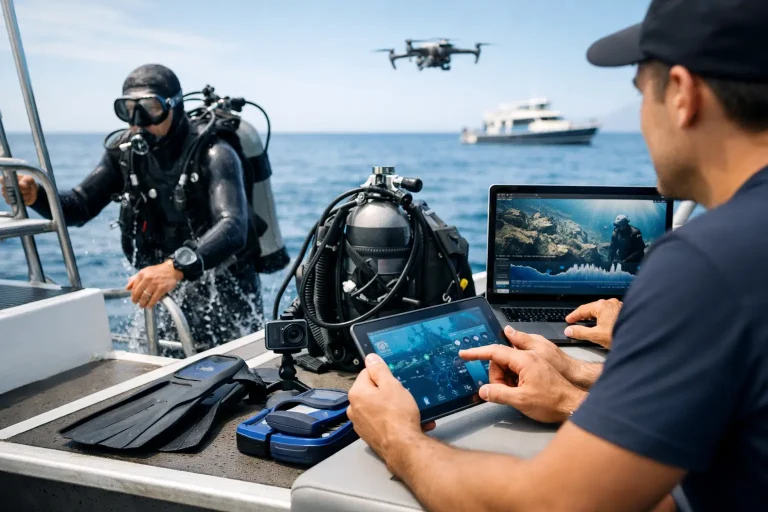
AI should not be introduced simply because it is fashionable. Its value lies in helping operators manage information, reduce repetitive work, improve communication, and make relevant knowledge accessible at the right moment.
Potential applications include assisting with customer inquiries, identifying missing information, supporting planning, organizing operational knowledge, and reinforcing diver education. These systems should remain transparent and keep professionals in control, particularly when decisions affect safety, medical suitability, or training readiness.
For Millibar, AI is not a standalone product added to the side of the workflow. It is a supporting layer within a connected DiveTech ecosystem, helping people work with operational and educational information more effectively.
Introducing change without losing the team
Even the right platform can fail when implementation ignores the people using it. Dive centers are often seasonal, understaffed, and operating under considerable time pressure.
Modernization should begin with the processes creating the greatest frustration. Success can then be measured in operational terms: fewer incomplete documents, faster responses, less duplicate entry, clearer daily planning, better staff coordination, and more consistent follow-up.
A staged approach is usually the most realistic. Establish the operational core first. Then expand communication, automation, educational support, reporting, and customer continuity around it.
This is the direction behind Millibar’s Diving Experience Manager and our broader strategy: building the DiveTech layer of the Blue Economy through connected software, data, and workflows for dive operators and divers.
The future of dive operations will not be built by replacing professional judgment. It will be built by giving skilled teams better systems to coordinate, teach, communicate, and care with greater consistency.
That is how diving becomes easier to operate, more connected for divers, and better prepared for the future.