Generic Software vs Dive Operations Stack: What Dive Centers Really Need
Generic Software vs Dive Operations Stack: What Dive Centers Really Need
At 6:30 a.m., a dive center’s day may already be spread across a booking calendar, waiver folder, spreadsheet, messaging thread, payment terminal, instructor notes, and weather forecast. Each tool serves a purpose. The challenge is bringing the information together before the first guests arrive.
Choosing between generic software and a dive operations stack starts with understanding how your team works. Can the tools support the journey from first inquiry to first dive, from student to certified diver, and from a booking request to a carefully prepared day on the water?
Many centers have built effective workflows with calendars, forms, spreadsheets, and chat platforms. As bookings, staff, and training programs grow, however, keeping those tools connected can become a job of its own.
Generic Software vs Dive Operations Stack: The Real Difference
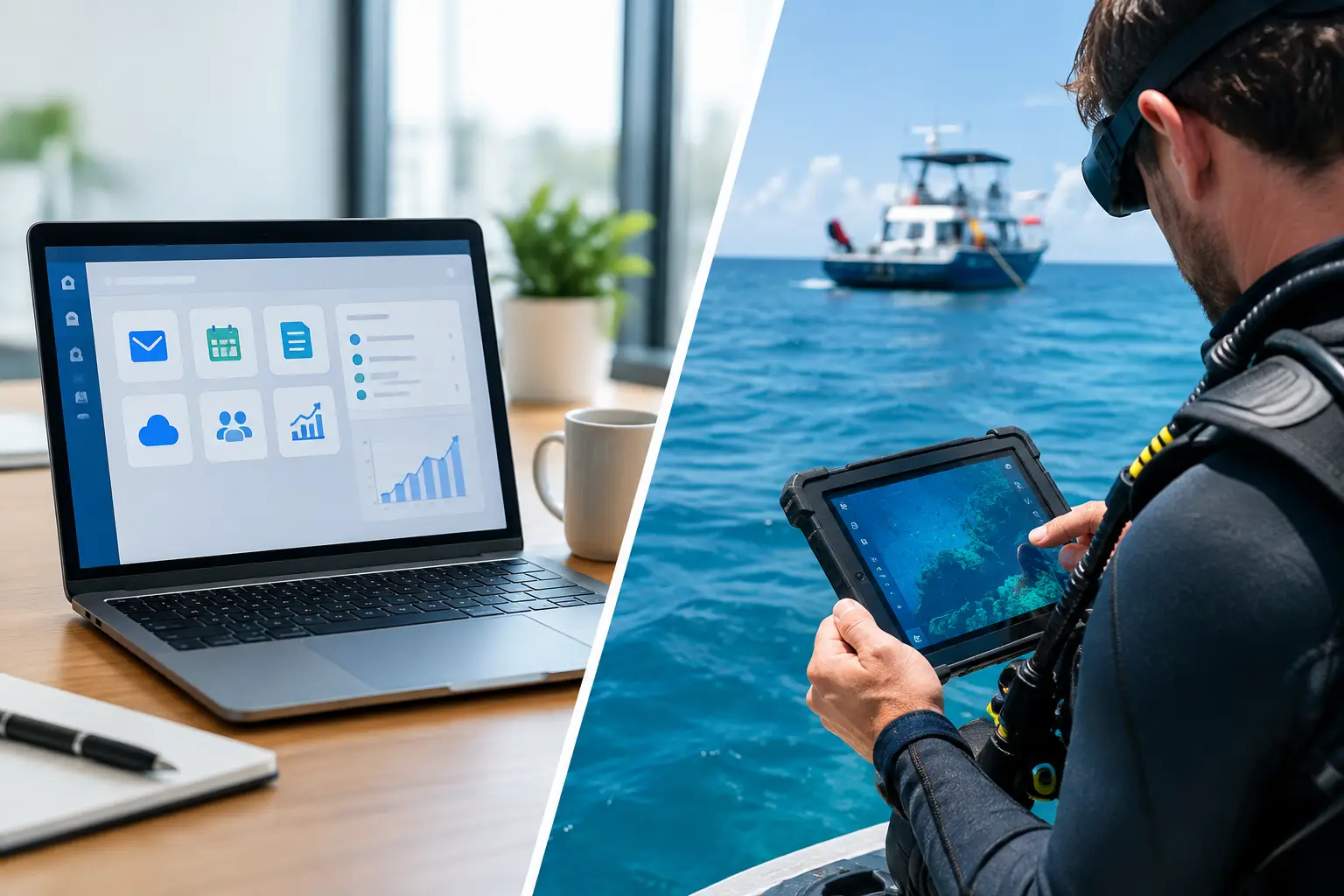
General-purpose software solves familiar business needs. A scheduling platform manages appointments. A customer relationship management system organizes contacts. An e-signature service collects signed documents. A payment platform handles transactions. With thoughtful configuration, these tools can support many aspects of a dive business.
A dive operations stack brings those functions together around the realities of diving. Reservations, diver profiles, required documentation, certification prerequisites, equipment needs, instructor assignments, and trip logistics become connected parts of the same experience.
That connection matters because a dive center manages much more than availability. Teams consider participant experience, learning needs, environmental conditions, staff capacity, and group composition. Useful technology helps them find and act on relevant information at the right moment.
The right setup depends on the operation. A small team with a focused offering may gain more from clearer processes than from introducing a large platform. A growing center may need stronger connections between existing systems. The aim is to reduce avoidable friction while supporting the people delivering the experience.
Where Fragmented Tools Start to Cost More
The first cost is staff attention. An instructor searching three systems for a student’s documents, course progress, and pickup details has less time to prepare for teaching. A manager copying booking information into manifests, messages, and schedules repeats work that could already be available to the team.
The second cost is inconsistency. A confirmation email may contain one arrival time while a staff message contains another. An equipment request may reach reception but miss the person preparing rental gear. These small gaps create uncertainty for customers and extra coordination for staff.
In diving, clear communication helps build confidence. Guests want to understand what happens next, and teams need a shared understanding of what has been arranged. A smooth experience begins well before anyone enters the water.
The third cost is limited operational visibility. Seeing six bookings does not necessarily show whether all six participants have completed their documents, meet the relevant prerequisites, or need rental equipment. General-purpose tools can capture these details, but connecting them often requires additional configuration and manual checks.
Fragmentation also makes improvement harder. Customer questions, incomplete paperwork, course interruptions, and repeat bookings all tell part of the operational story. When that information remains scattered, teams have less opportunity to understand recurring problems and improve the experience.
Spreadsheets still have a place
Spreadsheets are flexible, familiar, and useful for planning. Many dive professionals rely on them effectively, especially for occasional tasks or smaller operations.
The difficulty arises when essential information becomes hard to share, update, or verify. A file that makes perfect sense to its creator may be difficult for another instructor to interpret during a busy morning.
As a business grows, important knowledge needs to remain accessible beyond any one person. The practical question is whether everyone responsible for a task can find reliable information when they need it.
What Connected Diving Tools Should Support
A purpose-built setup can be an integrated set of tools, with each serving a clear role. What matters is continuity: information should move through the diver’s journey and the center’s workflows without repeated requests and unnecessary re-entry.
For a dive center, that connection begins with the diver profile. Beyond contact details, a useful profile brings together relevant certifications, experience, course enrollment, required documents, preferences, and communication history. Personal information needs appropriate privacy protections and access limited to those who need it.
Booking should connect customer demand with operational capacity. Depending on the activity, this may involve prerequisites, equipment, instructor or guide availability, transport, and location. A booking system becomes more useful when it helps staff understand what preparation each reservation requires.
Learning deserves the same continuity. Enrollment and payment are only the beginning of a course. Students also need preparation, feedback, practice, and clear next steps. When relevant information is organized and accessible, instructors can spend less time chasing details and more time understanding where each student needs support.
The benefits extend beyond a single booking. A diver returning for further training should be able to build on previous experience. An instructor working with a center needs clear access to the records relevant to their role. A center benefits from maintaining a useful relationship with customers as their interests and abilities develop.
Communication connects these experiences. Timely reminders about documents, arrival details, equipment, or learning preparation can reduce uncertainty. Thoughtful follow-up can help someone discover their next course or return to diving with greater confidence.
Millibar’s broader approach connects divers, instructors, and dive centers through a shared digital ecosystem. The Diving Experience Manager is part of that approach, helping organize